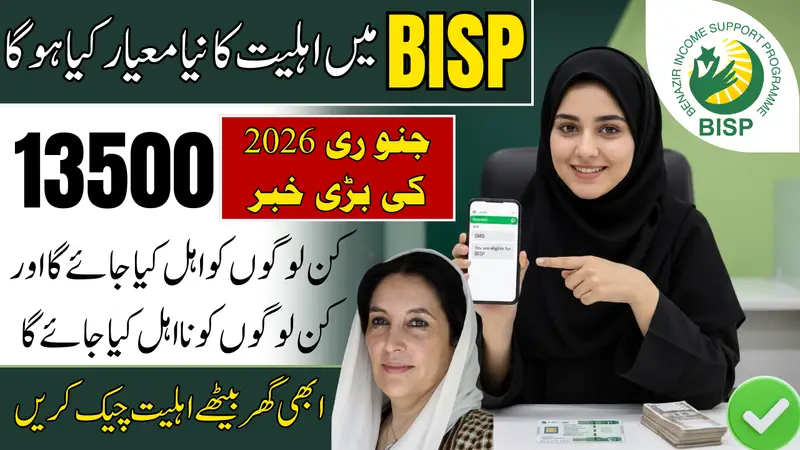
Understanding BISP eligibility requirements is the first step toward securing financial assistance for your family. The Benazir Income Support Programme uses a scientific assessment system called the Proxy Means Test (PMT) to identify deserving households across Pakistan. This comprehensive guide explains who qualifies for BISP benefits in 2026, how the PMT score determines eligibility, and what steps you can take to improve your chances of approval.
What Makes You Eligible for BISP in 2026?
BISP targets Pakistan’s most vulnerable families, particularly women-headed households struggling with poverty. The program operates under strict criteria to ensure assistance reaches those who genuinely need support rather than those who can manage independently.
Primary Eligibility Requirements:
Your household must meet all these fundamental conditions to qualify for the 8171 ehsaas program benefits:
PMT Score Below 32: This scientific poverty measurement determines your qualification. Families scoring 32 or below on a 0-100 scale are considered eligible for standard assistance.
Valid CNIC: The female household head must possess a current, non-expired national identity card with accurate biometric data registered in NADRA systems.
No Government Employment: Households with active government employees or civil servants are automatically disqualified regardless of their PMT score.
No Government Pension: Families receiving any type of government pension or retirement benefits cannot receive BISP assistance simultaneously.
Updated NSER Survey: Your family information must be recorded in the National Socio-Economic Registry through the dynamic survey process.
Verified Biometric Data: Fingerprint verification through NADRA systems must successfully match your identity for payment processing.
Understanding the PMT Score System
The Proxy Means Test score is a number between 0 and 100 that scientifically measures your household’s poverty level. Lower scores indicate greater financial vulnerability and higher eligibility for government assistance.
How PMT Scores Are Calculated:
BISP employs a sophisticated formula that evaluates multiple poverty indicators to generate your score:
Household Demographics:
- Total number of family members
- Number of dependent children under 18
- Number of elderly members over 65
- Number of disabled or specially-abled individuals
- Gender distribution within the household
Income and Employment:
- Monthly household income from all sources
- Employment status of adult family members
- Type of work (formal vs informal sector)
- Regularity and stability of income
- Agricultural income if applicable
Asset Ownership:
- Residential property ownership and size
- Agricultural land holdings
- Vehicle ownership (type and quantity)
- Livestock ownership
- Valuable household items (refrigerators, air conditioners)
Housing Conditions:
- Type of dwelling (pucca, semi-pucca, katcha)
- Number of rooms in the house
- Access to basic utilities (electricity, gas, water)
- Sanitation facilities available
- Construction materials used
Education Access:
- Children’s school enrollment status
- Educational attainment of adults
- Distance to nearest educational facilities
- Literacy levels within household
The PMT Threshold for 2026:
The current eligibility threshold remains at 32 for regular female beneficiaries. This means households scoring 32 or below qualify for the standard Rs. 13,500-14,500 quarterly payment.
Special Categories with Different Thresholds:
Families with Disabled Members: The PMT threshold increases to 37 for households caring for differently-abled individuals, recognizing the additional expenses associated with disability care.
Transgender Beneficiaries: BISP has approved policies for including transgender individuals, with special consideration given during assessment regardless of standard thresholds.
Widows with Dependent Children: Priority consideration applies even if PMT scores marginally exceed 32, acknowledging the vulnerability of single-mother households.
Who Cannot Receive BISP Benefits?
Understanding exclusion criteria is equally important to avoid wasting time on applications that cannot succeed:
Automatic Disqualification Factors:
High-Value Asset Ownership:
- Ownership of luxury vehicles (cars newer than 10 years, motorcycles above 200cc)
- Commercial property ownership
- Large agricultural landholdings exceeding specified limits
- Multiple residential properties
- Significant livestock holdings (over 5 cattle or 15 goats)
Government Connections:
- Active government employment at any level
- Receipt of government pensions
- Military service pensions
- Judiciary or legislative positions
- Direct family members in high government positions
Financial Indicators:
- Regular salary exceeding Rs. 30,000 monthly
- Bank accounts showing substantial regular deposits
- Business ownership with annual revenue above thresholds
- Rental income from multiple properties
- Foreign remittances exceeding specified amounts
Travel History:
- Frequent international travel records
- Valid foreign work visas
- Possession of multiple passports
- Regular overseas trips in past 5 years
Utility Consumption:
- Monthly electricity bills consistently exceeding Rs. 5,000
- High gas consumption indicating affluent lifestyle
- Multiple utility connections under family names
How to Check Your PMT Score and Eligibility
Before applying for BISP, verify your current eligibility status through the official 8171 BISP to understand where you stand:
Online Portal Method:
- Visit the official 8171 web portal on any device
- Enter your complete 13-digit CNIC number without dashes
- Solve the security captcha displayed on screen
- Click submit to retrieve your information
- View your PMT score, eligibility status, and payment details
The portal displays comprehensive information including your exact PMT score, registration date, family details, and current payment status if you’re already enrolled.
SMS Verification Method:
- Open your mobile phone’s messaging app
- Type only your 13-digit CNIC number
- Send the message to 8171
- Wait 30-60 seconds for automated response
- Read your eligibility status and score information
This free service operates 24/7 and provides instant verification without requiring internet connectivity.
Factors That Increase Your PMT Score
Understanding what raises your score helps you identify issues that might be preventing eligibility:
Mobile Phone Usage: Heavy mobile data consumption and high recharge amounts suggest financial capacity that increases your score. Excessive mobile expenses signal you’re not extremely poor.
Banking Transactions: Frequent bank deposits, withdrawals, and transfers indicate financial activity that raises poverty assessment scores. Active banking suggests regular income sources.
Property Records: Ownership of titled property, even if modest, significantly increases scores. Land ownership reflects assets that disqualify extreme poverty classification.
Vehicle Registration: Any vehicle registered under family members’ names raises scores substantially. Motorcycles, cars, or commercial vehicles all impact assessments negatively.
Utility Bill Patterns: High electricity consumption patterns indicate lifestyle standards inconsistent with poverty. Air conditioners, heaters, and multiple appliances raise scores.
Employment Records: Formal employment with documented salaries dramatically increases scores. Even informal but regular work affects poverty classification.
Children’s Education: Enrollment in expensive private schools suggests financial capacity that conflicts with poverty claims and increases assessment scores.
How to Improve Your Eligibility
If your current PMT score exceeds 32 but your circumstances have genuinely worsened, you can take steps to update your assessment:
Request a Dynamic Survey:
Visit your nearest BISP Tehsil Office and request re-assessment through the dynamic survey process. This updated evaluation reflects current circumstances rather than outdated information.
Provide Accurate Updated Information:
During re-survey, honestly report all changes in household circumstances including:
- Job loss or reduced income
- Increased family size due to births or dependents
- Death of income-earning family members
- Sale of assets due to financial hardship
- Medical emergencies depleting savings
- Educational expenses for children
Document Major Life Changes:
Bring supporting documents proving significant changes:
- Death certificates if you’ve lost a spouse or earning member
- Medical certificates for new disabilities or chronic illnesses
- Termination letters from employment
- Property sale documents showing asset liquidation
- School certificates for children’s enrollment
Correct Data Errors:
Sometimes high scores result from database mistakes rather than actual circumstances. Common errors include:
- Incorrect income figures entered during surveys
- Properties registered under your CNIC but actually belonging to others
- Outdated employment status showing jobs you no longer hold
- Duplicate entries showing multiple assets you don’t possess
Visit NADRA offices to correct CNIC-related information, then inform BISP to update their records accordingly.
Special Priority Categories in 2026
BISP provides special consideration to certain vulnerable groups who receive priority assessment and approval:
Widows and Single Mothers:
Women who’ve lost spouses and now support children alone receive expedited processing and favorable consideration even with borderline scores. The program recognizes their unique vulnerability.
Disabled Persons:
Individuals with physical or mental disabilities, or families caring for disabled members, qualify under the higher 37-point threshold and receive priority registration.
Elderly Females:
Women over 60 years old, especially those without adult children or family support, receive special attention during eligibility assessments.
Orphan Guardians:
Families caring for orphaned children unrelated to them by blood receive priority support recognition for their social responsibility.
Disaster-Affected Families:
Households impacted by natural disasters, floods, earthquakes, or other calamities receive temporary eligibility regardless of previous PMT scores.
Chronic Illness Cases:
Families with members suffering from chronic diseases requiring expensive ongoing treatment receive favorable consideration during assessments.
Additional BISP Programs and Their Eligibility
Beyond the standard Kafaalat cash transfer, BISP operates specialized programs with specific eligibility criteria:
Benazir Nashonuma (Nutrition Program):
Eligible Participants:
- Pregnant women from BISP-registered families
- Children under 24 months in enrolled households
- Women in first 1,000 days of child’s life
- Families showing signs of malnutrition
Benefits:
- Rs. 2,500 monthly for pregnant women
- Rs. 2,000-2,500 for children based on gender
- Free health checkups and nutritional counseling
- Growth monitoring and vaccination support
Benazir Taleemi Wazaif (Education Stipend):
Eligible Students:
- Primary school children of BISP families
- Secondary school students from enrolled households
- Regular attendance requirement (minimum 75%)
- Proper school enrollment documentation
Stipend Amounts:
- Rs. 1,000-1,500 quarterly for primary students
- Rs. 2,000-3,000 quarterly for secondary students
- Girls receive higher amounts to encourage female education
- Payments made directly to mothers’ accounts
Common Eligibility Mistakes to Avoid
Many applicants face rejection due to preventable errors during the registration and assessment process:
Providing Inaccurate Information:
Exaggerating poverty or hiding assets leads to disqualification when cross-verification reveals discrepancies. Always provide truthful information during surveys.
Expired CNIC:
Attempting registration or payment collection with expired identity cards fails biometric verification. Renew your CNIC at NADRA before interacting with BISP systems.
Incomplete Family Details:
Missing B-Forms for children or failing to report all household members results in inaccurate PMT calculations and potential ineligibility.
Using Others’ Phone Numbers:
Registering someone else’s mobile number for notifications creates verification problems and payment delays. Use only your own registered number.
Ignoring Re-Survey Requirements:
Failing to complete periodic dynamic surveys when notified leads to payment suspensions regardless of original eligibility status.
How Long Does Eligibility Last?
BISP eligibility isn’t permanent and requires periodic revalidation:
Current Policy Duration:
The PMT threshold of 32 for regular female beneficiaries remains valid until June 2026. This two-year stability period ensures enrolled families maintain uninterrupted support.
After June 2026:
The government will review and potentially adjust eligibility criteria based on:
- National poverty statistics and trends
- Available budget allocations
- Economic conditions and inflation rates
- Program evaluation results
Dynamic Survey Requirements:
All beneficiaries must complete re-surveys every 2-3 years to confirm continuing eligibility. Circumstances change, and updated assessments ensure assistance reaches those currently in need.
Checking Your Eligibility Status Regularly
Don’t wait until payment problems arise to verify your status. Regular monitoring through the 8171 ehsaas program portal helps you stay informed:
Monthly Status Checks:
Log onto the official portal monthly to verify:
- Your eligibility remains active
- PMT score hasn’t changed unexpectedly
- No pending survey requirements exist
- Payment processing continues normally
- Contact information remains current
Responding to Alerts:
BISP sends SMS notifications about:
- Required re-surveys or updates
- Biometric verification needs
- Document submission requirements
- Policy changes affecting eligibility
Respond promptly to maintain uninterrupted benefits.
What to Do If Marked Ineligible
Receiving an “Ineligible” status doesn’t mean permanent disqualification. Several recourse options exist:
Request Manual Review:
Visit your registered BISP Tehsil Office with:
- Your CNIC and registration documents
- Proof of changed circumstances
- Explanation of why you believe you qualify
- Any supporting documentation
Officials can initiate manual eligibility reviews for borderline or disputed cases.
Appeal the Decision:
BISP maintains a formal appeals process for rejected applications:
- Submit written appeal at Tehsil Office
- Provide comprehensive documentation supporting your claim
- Wait for review committee assessment (typically 4-6 weeks)
- Receive written decision with explanation
- Proceed to higher appeal if necessary
Request Fresh Survey:
If significant time has passed or circumstances changed substantially, request a completely new NSER survey rather than disputing the old assessment.
Maintaining Your Eligibility
Once approved, protect your beneficiary status by following these guidelines:
Keep Documents Current:
Ensure your CNIC never expires, maintaining valid biometric data in NADRA systems. Update address changes promptly through proper channels.
Report Major Changes:
Inform BISP immediately about:
- Marriage or divorce
- Death of family members
- New births in the household
- Significant income increases
- Asset acquisition
Transparency prevents problems during re-surveys.
Attend Required Surveys:
Complete dynamic surveys whenever notified. Missed surveys lead to payment holds and potential removal from beneficiary lists.
Maintain Accurate Mobile Contact:
Keep your registered phone number active and accessible. BISP communicates critical information via SMS that you cannot afford to miss.
Avoid Fraudulent Activities:
Never attempt to manipulate PMT scores through false information, hidden assets, or duplicate registrations. Detected fraud results in permanent disqualification and potential legal consequences.
Conclusion
BISP eligibility in 2026 centers on the PMT score assessment system that scientifically identifies Pakistan’s most deserving families. Understanding how this score is calculated, what factors influence it, and how to verify your status empowers you to access assistance if qualified or take corrective steps if currently ineligible.
The program’s commitment to supporting households scoring 32 or below through June 2026 provides stability and predictability for millions of families. Whether you’re applying for the first time or maintaining existing benefits, staying informed about eligibility criteria ensures uninterrupted access to this vital financial support.
Regular verification through the official 8171 Check Online Cnic, honest reporting during surveys, and prompt response to BISP notifications keep your benefits secure. For families genuinely struggling with poverty, BISP represents more than financial assistance—it’s a lifeline that enables dignity, education, healthcare, and hope for better futures.
Quick Eligibility Checklist:
- ✅ PMT Score 32 or below
- ✅ Valid, current CNIC
- ✅ No government employment/pension
- ✅ Updated NSER survey completed
- ✅ Successful biometric verification
- ✅ Female-headed household (preferred)
Verify your eligibility today: Send your CNIC to 8171 or visit the official portal. For detailed payment information, check the BISP payment schedule and explore digital wallet setup guides.