
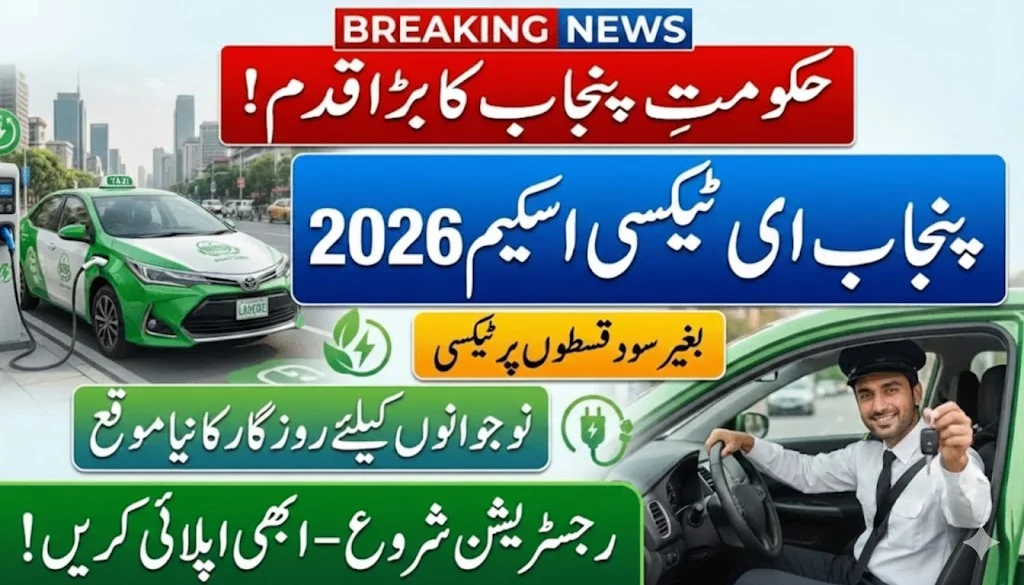
Punjab’s ambitious E-Taxi Scheme represents a transformative approach to urban transportation challenges, combining environmental sustainability with economic opportunity. As Pakistan’s most populous province launches this initiative, thousands of aspiring entrepreneurs see a pathway to vehicle ownership and stable income generation through government-backed financing.
This comprehensive analysis covers everything potential applicants need to know about the Punjab E-Taxi program, from technical specifications and financial structures to application procedures and realistic income projections.
Understanding the E-Taxi Revolution in Pakistan
The shift toward electric mobility accelerates globally as nations confront climate challenges and energy security concerns. Pakistan, heavily dependent on imported petroleum products, faces particular urgency in transitioning toward sustainable transport alternatives. Urban centers like Lahore and Rawalpindi suffer from severe air quality issues, ranking among the world’s most polluted cities.
The Punjab E-Taxi Scheme addresses multiple interconnected challenges simultaneously. By introducing 1,100 electric vehicles in Phase 1, the program creates immediate employment while demonstrating electric vehicle viability in Pakistani conditions. Unlike previous transport initiatives focused solely on subsidizing fares or expanding routes, this scheme empowers individual entrepreneurs to own modern, technology-enabled vehicles.
The Economic Logic Behind E-Taxis
Traditional taxi operations in Pakistan face persistent challenges. Rising fuel prices erode profit margins, aging vehicle fleets require frequent repairs, and lack of standardization undermines passenger confidence. Drivers often struggle with debt from high-interest vehicle financing, creating cycles of financial vulnerability.
Electric taxis fundamentally alter this economic equation. Electricity costs approximately one-fifth of petrol expenses per kilometer, dramatically reducing operational costs. Electric motors require minimal maintenance compared to internal combustion engines—no oil changes, transmission repairs, or exhaust system replacements. These savings accumulate to substantial amounts over vehicle lifetimes.
Moreover, government backing eliminates predatory lending practices. Interest-free financing through official channels means every payment builds equity rather than enriching middlemen or financial institutions. This dignified approach to vehicle ownership represents a significant departure from exploitative systems that have historically disadvantaged working-class entrepreneurs.
Detailed Vehicle Specifications and Technology Integration
Understanding what you’re purchasing matters enormously when committing to multi-year financing arrangements. The E-Taxi program vehicles incorporate several key features distinguishing them from standard passenger cars.
Battery and Range Performance
Phase 1 vehicles feature lithium-ion battery packs providing 250-300 kilometer range per full charge. This capacity suits urban taxi operations where daily distances typically fall within this range. Modern battery management systems optimize charging cycles and temperature regulation, extending battery life and maintaining performance.
Charging infrastructure remains a legitimate concern. Currently, Punjab operates approximately 40 public fast-charging stations across major cities, with plans to expand to 200 stations by end of 2026. Fast chargers restore 80% capacity within 45-60 minutes, while standard home charging takes 8-10 hours for full replenishment.
The government is negotiating with electricity distribution companies to provide special tariffs for E-Taxi charging, potentially reducing operational costs further. Home charging during off-peak hours (midnight to 6 AM) may qualify for reduced rates, making overnight charging economically attractive.
Smart Technology Features
Beyond basic transportation, E-Taxi vehicles integrate technology enhancing both driver earnings and passenger experience:
GPS Tracking Systems: Real-time location monitoring enables dispatch optimization and provides security for both drivers and passengers. The system logs all trips, creating verifiable records useful for resolving disputes or insurance claims.
Digital Fare Meters: Automated fare calculation eliminates arguments about charges. Meters use GPS data to calculate distance-based fares according to official rate cards, with digital payment integration supporting both cash and electronic transactions.
Driver and Passenger Apps: Dedicated applications connect drivers with ride requests, similar to ride-sharing platforms but government-regulated. Passengers can book E-Taxis through official apps, rate their experience, and pay electronically.
Safety Features: Emergency buttons connect directly to monitoring centers, vehicle immobilizers prevent theft, and cameras record interior activities for security purposes.
Vehicle Quality and Durability
While specific manufacturers remain subject to final procurement decisions, vehicles showcased during program announcements display solid build quality comparable to mid-range passenger cars. Spacious interiors accommodate four passengers comfortably plus luggage space, important for airport runs and family transport.
Electric drivetrains typically last 500,000+ kilometers with minimal maintenance, far exceeding traditional engine longevity. Battery warranties usually cover 8-10 years or specific mileage thresholds, providing long-term cost predictability.
Comprehensive Eligibility Requirements
The Punjab government established specific criteria ensuring program benefits reach deserving candidates while minimizing default risks.
Basic Qualification Standards
Age Requirements: Applicants must be at least 18 years old with no upper age limit, though financial viability assessments may consider age in relation to repayment timeline. Younger applicants benefit from longer working careers ahead, while experienced older drivers bring established customer bases and reputation.
Residency Verification: Permanent Punjab residency requires domicile certificate or CNIC showing Punjab address for minimum two consecutive years. This prevents applicants from other provinces gaming the system while ensuring benefits flow to Punjab taxpayers funding the program.
Driving License Validity: Current, valid driving licenses issued by Punjab authorities are mandatory. Licenses must not be suspended, revoked, or restricted. Provisional licenses don’t qualify—only full licenses demonstrating proven driving capability.
Clean Financial Record: Applicants undergo credit checks through State Bank of Pakistan’s credit bureau. Previous loan defaults, bankruptcy declarations, or dishonored checks create disqualification flags. This requirement protects both applicants from unsustainable debt and the program from high default rates.
Criminal Background Screening: Given the public-facing nature of taxi services and passenger safety concerns, applicants with convictions for violent crimes, theft, fraud, or moral turpitude face disqualification. Minor traffic violations or resolved civil disputes typically don’t affect eligibility.
Priority Categories
While basic eligibility opens the program to all qualifying Punjab residents, certain categories receive priority consideration during balloting:
Existing Taxi/Rickshaw Operators: Professional drivers already operating licensed vehicles demonstrate commitment to transport services. Their experience increases success probability, and transitioning them to electric vehicles accelerates fleet modernization.
Youth (Ages 18-35): Young applicants receive preference recognizing higher unemployment rates in this demographic. Providing vehicle ownership opportunities early in careers creates long-term economic stability.
Women Entrepreneurs: At least 10% of vehicles are reserved for women applicants, promoting gender equity in transport sectors traditionally dominated by men. Women-only taxi services address cultural sensitivities and create safer transport options for female passengers.
Persons with Disabilities: Recognizing employment barriers faced by PWDs, modified vehicles with accessibility features may be available for qualified drivers with disabilities. This inclusion demonstrates commitment to universal employment access.
Veterans and Government Retirees: Former military personnel and retired government employees below pension thresholds receive priority acknowledging their public service contributions.
Documentation Requirements
Successful application requires submitting verified documents proving eligibility:
- CNIC: Original computerized national identity card issued by NADRA, not expired, with current Punjab address
- Driving License: Valid Punjab-issued license with minimum two years validity remaining
- Domicile Certificate: Punjab domicile proving permanent residency status
- Bank Statements: Three months of bank statements demonstrating financial transactions and deposit capacity
- Income Verification: Salary slips, business registration, or tax returns proving income sufficient for installment payments
- Character Certificate: Issued by local police station or magistrate court
- Passport-Size Photographs: Recent photographs meeting official documentation standards
- Guarantor Documentation: CNIC and income proof for nominated guarantor meeting specified financial criteria
All documents undergo thorough verification by Punjab Information Technology Board systems cross-referencing with NADRA, police, and banking databases.
Financial Structure and Payment Mechanisms
Understanding the complete financial commitment helps applicants make informed decisions about program participation.
Vehicle Cost Breakdown
The estimated Rs. 6.5 million price tag includes several components:
Base Vehicle Cost: Approximately Rs. 5.2 million for the electric car itself including battery, drivetrain, and standard features.
Technology Integration: Rs. 600,000 covers GPS systems, digital meters, monitoring equipment, and communication devices.
Branding and Licensing: Rs. 400,000 includes official E-Taxi livery, licensing fees, route permits, and initial insurance coverage.
Pre-Delivery Preparation: Rs. 300,000 accounts for import duties (if applicable), local assembly, quality checks, and delivery logistics.
Down Payment Structure
The 30% down payment amounts to approximately Rs. 1.95 million—a substantial sum requiring careful financial planning. However, this proves significantly lower than traditional vehicle financing requiring 40-50% down payments for commercial vehicles.
Payment options include:
Lump Sum Payment: Full down payment at vehicle allocation, providing quickest processing.
Staggered Payment: Two-installment down payment over 60 days, allowing time to arrange funds.
Down Payment Assistance: Eligible low-income applicants may qualify for government subsidy reducing down payment to 20% (Rs. 1.3 million), though this requires additional documentation proving economic need.
Interest-Free Installment Plan
The remaining Rs. 4.55 million divides into monthly installments over six years (72 months), resulting in approximately Rs. 63,200 monthly payments. This represents genuine interest-free financing—no markup, service charges, or hidden fees increase the principal amount.
Compare this to commercial vehicle financing charging 18-22% annual interest, where the same Rs. 4.55 million loan would cost Rs. 90,000+ monthly with total repayment exceeding Rs. 6.5 million in interest alone. The government’s interest-free model saves participants millions over the loan term.
Income Projections and Profitability
Realistic earnings estimates help applicants assess financial viability:
Average Daily Trips: 15-20 rides per 10-12 hour shift Average Fare: Rs. 300 per trip Daily Gross Revenue: Rs. 4,500-6,000 Monthly Gross Revenue: Rs. 135,000-180,000
Operating Expenses:
- Electricity charging: Rs. 15,000
- Maintenance and repairs: Rs. 8,000
- Insurance renewal: Rs. 3,000
- Parking and miscellaneous: Rs. 5,000
- Total Monthly Expenses: Rs. 31,000
Net Income Before Installment: Rs. 104,000-149,000
After Installment Payment: Rs. 40,800-85,800
These projections assume consistent operation and urban route availability. Successful drivers optimize earnings through airport runs, corporate contracts, and peak-hour operations, potentially exceeding these estimates.
Step-by-Step Application Process
The entirely digital application system managed by Punjab Information Technology Board ensures transparency and efficiency.
Phase 1: Online Registration
Access the official Punjab E-Taxi portal through PITB’s website. Create a user account using your CNIC number and mobile phone registered under your name. The system sends one-time passwords for verification.
Complete the comprehensive application form covering:
- Personal information (name, father’s name, date of birth)
- Contact details (address, phone, email)
- Family composition and dependent information
- Current employment and income sources
- Previous driving experience
- Vehicle ownership history
- References and guarantor details
Take time completing this form accurately. Errors or inconsistencies trigger rejection or verification delays. The system allows saving progress and returning later, so you needn’t complete everything in one session.
Phase 2: Document Upload
After completing the application form, upload clear, legible copies of all required documents. Use scanning apps to ensure document quality—blurry or partial images cause rejection.
The portal specifies exact requirements:
- CNIC: Front and back in single file, PDF or JPG format, maximum 2MB
- Driving License: Both sides clearly visible, showing issue and expiry dates
- Bank Statements: All pages including account details and transaction history
- Income Documents: Complete documents, not excerpts or partial pages
Double-check each upload before submission. Once submitted, documents cannot be changed without formal amendment requests.
Phase 3: Verification Process
PITB systems automatically verify submitted information against multiple databases:
NADRA Verification: Confirms CNIC authenticity, checks for discrepancies or duplicate registrations, validates personal information accuracy.
Traffic Police Database: Verifies driving license validity, checks for suspensions or violations, confirms clean driving record.
State Bank Credit Bureau: Reviews financial history, identifies previous defaults or bankruptcies, assesses creditworthiness.
Punjab Police Records: Screens for criminal history, outstanding warrants, or legal issues.
This comprehensive verification takes 15-30 days depending on application volume and database response times. Applicants receive SMS updates as verification progresses through each stage.
Phase 4: Financial Assessment
Applications passing initial verification undergo detailed financial assessment evaluating ability to sustain monthly payments:
Income Adequacy: Assessors verify that documented income exceeds installment amounts by minimum 40% margin, ensuring affordability without financial strain.
Expense Analysis: Family size, dependents, existing debts, and living costs factor into disposable income calculations.
Guarantor Verification: Nominated guarantors must prove financial capacity to assume payment obligations if primary applicant defaults.
Applications demonstrating marginal financial capacity may receive conditional approval requiring additional guarantors or larger down payments.
Phase 5: Balloting and Selection
More applicants than available vehicles necessitates fair selection through transparent balloting conducted publicly with media presence and third-party audit.
Balloting Categories: Separate ballots for general merit, priority categories (women, youth, PWDs), and regional quotas ensure equitable distribution.
District-Wise Allocation: Vehicle distribution follows population proportions, preventing concentration in specific areas.
Public Announcement: Results published on official portals and newspapers, with selected applicants receiving direct notification via SMS and email.
Unsuccessful applicants automatically roll over to subsequent phases unless they request withdrawal.
Phase 6: Vehicle Allocation and Delivery
Selected applicants receive allocation letters specifying:
- Exact vehicle model and specifications
- Down payment deadline (typically 30 days)
- Delivery timeline and location
- Required documentation for vehicle handover
Applicants pay down payments through designated bank accounts, never to individuals or agents. Payment receipts must be preserved as proof.
Upon payment confirmation, applicants attend vehicle handover ceremonies receiving:
- Vehicle with registration completed
- All technology systems activated
- Insurance coverage initiated
- Driver training certification
- Operating manuals and contact information
Integration with Government Support Systems
The E-Taxi program doesn’t exist in isolation. Understanding connections with other initiatives maximizes available support.
Coordination with Social Safety Nets
Many applicants come from economically vulnerable backgrounds, potentially qualifying for parallel assistance programs. The government encourages E-Taxi participants to access complementary support:
BISP Beneficiaries: Families receiving Benazir Income Support Programme payments through 8171 remain eligible for E-Taxi scheme. The programs serve different purposes—BISP addresses household poverty while E-Taxi creates income-generating opportunities. Successful applicants maintaining BISP eligibility continue receiving both benefits during initial business establishment phases.
Youth Loan Programs: Punjab Youth Loans complement E-Taxi financing for young entrepreneurs needing working capital. While E-Taxi covers vehicle costs, youth loans can finance home charging station installation, marketing materials, or emergency reserves.
Skills Development Initiatives: The Technical Education and Vocational Training Authority (TEVTA) offers free courses on electric vehicle maintenance, customer service, and small business management specifically for E-Taxi drivers. These programs run quarterly at TEVTA centers across Punjab.
Charging Infrastructure Development
The Energy Department coordinates with E-Taxi operations to ensure adequate charging availability:
Public Fast-Charging Network: Target expansion to 200 stations by late 2026, strategically located along high-traffic routes, near airports, and in commercial districts.
Home Charging Subsidies: Selected E-Taxi drivers may qualify for subsidized home charging equipment installation, reducing dependence on public infrastructure.
Dedicated Taxi Charging Zones: Some cities are establishing driver rest areas with charging facilities, washrooms, and prayer spaces specifically for E-Taxi operators.
Smart City Integration
As Punjab develops smart city infrastructure, E-Taxi vehicles integrate with broader urban systems:
Traffic Management: Real-time vehicle location data helps authorities optimize traffic flow and identify congestion patterns.
Emergency Response: E-Taxis can receive alerts to assist in emergency situations, transporting patients or evacuees during crises.
Tourism Development: Designated E-Taxis may participate in official tourism programs, providing guided city tours with trained drivers earning premium fares.
Operational Guidelines and Regulations
Vehicle ownership brings responsibilities beyond making payments. Understanding operational requirements ensures compliance and maximizes earning potential.
Licensing and Permits
All E-Taxi operators must maintain:
Route Permits: Specify authorized operating zones and passenger pickup locations. Some high-demand areas like airports require special permits with limited issuance.
Commercial Insurance: Comprehensive coverage protecting against accidents, theft, and third-party liability. Annual premiums average Rs. 40,000-50,000 depending on driver experience and vehicle value.
Fitness Certificates: Annual vehicle inspections confirming mechanical safety and emission compliance (though electric vehicles face simplified emission checks).
Driver Permits: Updated professional driving permits with endorsement for commercial passenger transport.
Fare Structure Compliance
Government-regulated fare cards prevent price exploitation while ensuring driver viability:
Base Fare: Rs. 150 for first 3 kilometers
Per Kilometer: Rs. 40 for subsequent distance
Waiting Charges: Rs. 10 per minute after initial 5 minutes
Night Surcharge: 20% additional between 10 PM and 6 AM
Airport Runs: Flat Rs. 300 airport toll in addition to metered fare
Digital meters automatically calculate fares, but drivers must understand rate structures for passenger inquiries.
Maintenance and Service Requirements
Electric vehicles require different maintenance approaches than conventional vehicles:
Battery Health Monitoring: Monthly diagnostics check battery capacity and charging efficiency. Degradation below 80% capacity within warranty period triggers free replacement.
Software Updates: Regular updates to GPS systems, meters, and vehicle software maintain functionality and security. Authorized service centers provide these updates free during warranty periods.
Tire and Brake Service: Electric vehicles’ regenerative braking reduces brake wear, but regular inspection remains necessary. Tire rotation every 10,000 kilometers extends tire life.
Authorized Service Centers: Warranty covers repairs only at designated facilities. Unauthorized modifications void warranties and create safety risks.
Challenges and Realistic Expectations
While the E-Taxi scheme offers tremendous opportunities, potential participants should understand limitations and challenges.
Initial Financial Pressure
The Rs. 1.95 million down payment represents substantial savings for most applicants. Families may need to liquidate assets, borrow from relatives, or use life savings. This creates vulnerability if income projections don’t materialize immediately.
New operators face learning curves building customer bases and optimizing routes. Initial months may generate lower-than-expected revenue, creating payment stress. Applicants should maintain 3-6 months expense reserves before committing to avoid default risks.
Charging Infrastructure Limitations
Despite expansion plans, current charging availability constrains operations. Drivers may spend 45-90 minutes daily at charging stations, reducing productive earning hours. Home charging requires dedicated electrical connections, potentially involving additional installation costs for applicants in rental housing or areas with limited electrical capacity.
Queue times at popular charging stations during peak hours frustrate drivers and create opportunity costs. Infrastructure should improve over time, but early adopters face transition challenges.
Technology Adaptation Requirements
Drivers accustomed to traditional vehicles need training on electric vehicle operation, battery management, and technology system usage. Older drivers may struggle with smartphone apps and digital payment systems, requiring family support or technical assistance.
System glitches occasionally disrupt GPS or meter functionality. While support hotlines exist, resolution may take hours, impacting earnings during downtime.
Market Competition
E-Taxis compete with established ride-hailing services (Careem, InDrive), traditional taxis, and public transport. Building customer preference requires superior service, reliability, and competitive pricing.
Some customers remain skeptical of electric vehicles, preferring familiar petrol cars. Education and positive experiences gradually overcome this resistance, but initial customer acquisition proves challenging.
Regulatory Evolution
As a new program, regulations continue evolving based on operational experience. Policy changes regarding fares, route permits, or operational hours could impact profitability. Staying informed through official channels and driver associations helps navigate regulatory adjustments.
Success Stories and Early Outcomes
Though still in early phases, initial E-Taxi deployments provide encouraging indicators:
Several pilot participants report 30-40% higher daily earnings compared to previous rickshaw or taxi operations, primarily from fuel cost savings and access to premium customer segments preferring modern vehicles.
Women drivers particularly benefit from enhanced safety features and professional image, attracting female passengers seeking comfortable, secure transport. Some have established regular corporate contracts for school pickups and office commutes, providing stable income streams.
Environmental monitoring shows measurable air quality improvements in areas with concentrated E-Taxi operations. Each vehicle eliminates approximately 4-5 tons of carbon emissions annually compared to equivalent petrol vehicles, contributing to pollution reduction goals.
Customer satisfaction ratings exceed 4.2 out of 5 stars, with cleanliness, punctuality, and driver professionalism receiving particular praise. Positive customer experiences drive repeat usage and referrals, benefiting all program participants.
Future Program Expansion
Success of Phase 1 informs future development:
Phase 2 Planning: An additional 2,500 vehicles planned for mid-2026, expanding to more cities including Gujranwala, Sialkot, and Bahawalpur.
Model Diversification: Larger capacity vehicles for group transport and adapted vehicles for passengers with disabilities under consideration.
Integration with Public Transport: E-Taxis may function as feeder services connecting residential areas to metro bus and orange line stations, filling first-mile/last-mile gaps.
Export Potential: Successful implementation positions Punjab as regional leader in electric transport transition, potentially attracting manufacturing investment and creating export opportunities.
How to Stay Updated
Given the program’s evolving nature, maintaining current information proves essential:
Official Channels:
- Punjab Information Technology Board website and portal
- Punjab Transport Department announcements
- Official social media (Twitter: @PTAofficial, Facebook: Punjab Transport Authority)
News Monitoring:
- Major newspapers covering government initiatives
- Transport sector publications
- Government scheme updates through 8171 portal
Driver Networks:
- E-Taxi Driver Association (forming in major cities)
- WhatsApp groups for participants
- Monthly town hall meetings with transport officials
Frequently Asked Questions
Can I operate the E-Taxi part-time while maintaining other employment?
Regulations permit part-time operation, though financing assumes full-time income generation. Monthly installments remain same regardless of usage, so part-time operators must ensure other income covers payments during low-earning periods.
What happens if I cannot make monthly payments due to illness or emergency?
Contact the Finance Department immediately to request payment deferment or restructuring. Genuine hardship cases may receive temporary relief, but communication prevents default proceedings. Extended non-payment risks vehicle repossession.
Can I sell the E-Taxi before completing payments?
Vehicle ownership transfers require Finance Department approval and finding qualified buyers willing to assume remaining installments. Early sale typically results in financial loss due to depreciation and transfer costs.
Are passengers allowed to eat or smoke inside E-Taxis?
Smoking is strictly prohibited in all vehicles. Eating policies vary by driver preference, though many prohibit food to maintain cleanliness. Clear rules should be communicated to passengers upfront.
What insurance coverage comes with the vehicle?
Initial insurance covers third-party liability (legally mandatory) and basic theft protection. Comprehensive coverage including collision damage and personal accident insurance requires additional premium payments, highly recommended despite extra cost.
Can family members drive my allocated E-Taxi?
Only licensed individuals listed on your route permit can legally operate commercial vehicles. Adding family members requires updating permits with Transport Department and ensuring they meet licensing requirements.
What happens at end of six-year payment term?
Upon final payment, you receive clear title ownership with no restrictions. The vehicle becomes personal property you can operate indefinitely, sell freely, or transfer to family members.
How does warranty work for battery replacements?
Manufacturer warranties typically cover battery replacement if capacity drops below 80% within specified timeframe (usually 8 years/200,000 km). Normal degradation within acceptable parameters doesn’t qualify for free replacement.
Making Your Decision
The Punjab E-Taxi Scheme presents legitimate opportunity for individuals meeting eligibility criteria and possessing realistic expectations. The combination of interest-free financing, modern equipment, and government support creates favorable conditions for success.
However, substantial down payment requirements, operational challenges, and market competition necessitate careful assessment. Prospective applicants should:
Conduct Financial Planning: Honestly evaluate ability to sustain monthly payments during both good and challenging months. Build financial cushions before committing.
Research Local Markets: Investigate customer demand, competition levels, and earning potential in your intended operating area. Talk to existing taxi drivers about realistic income.
Develop Contingency Plans: Consider backup income sources or family support mechanisms if E-Taxi earnings temporarily fall short of projections.
Understand Technology: Ensure comfort with smartphone apps, digital payments, and basic troubleshooting before committing to technology-dependent operations.
Assess Long-Term Commitment: Six years represents significant commitment. Consider life plans, health status, and family obligations before proceeding.
For suitable candidates, the program offers dignified pathway to vehicle ownership and entrepreneurial independence, potentially transforming financial trajectories for entire families while contributing to Punjab’s environmental goals.
Conclusion
The Punjab E-Taxi Scheme 2026 exemplifies progressive policy-making addressing economic, environmental, and technological challenges simultaneously. By enabling ordinary citizens to access modern electric vehicles through interest-free financing, the government demonstrates commitment to inclusive economic development.
Success requires realistic expectations, financial discipline, and adaptation to new technology, but rewards include vehicle ownership, entrepreneurial autonomy, and participation in Pakistan’s clean energy future. For eligible individuals willing to embrace these challenges, the program represents opportunity worth serious consideration.
Potential applicants should remain engaged with official channels for updates, complete applications accurately and promptly, and prepare thoroughly before committing to this significant financial undertaking. With proper preparation and realistic planning, the E-Taxi scheme can indeed transform lives while modernizing Punjab’s urban transport landscape.
Those interested in other government assistance programs should explore complementary initiatives through resources like the 8171 web portal which provides information about various social protection schemes available to Punjab residents.
Disclaimer: This article provides general information based on current program details. Specific terms, costs, and procedures may change. Always verify information through official Punjab Government channels before making applications or financial commitments.