
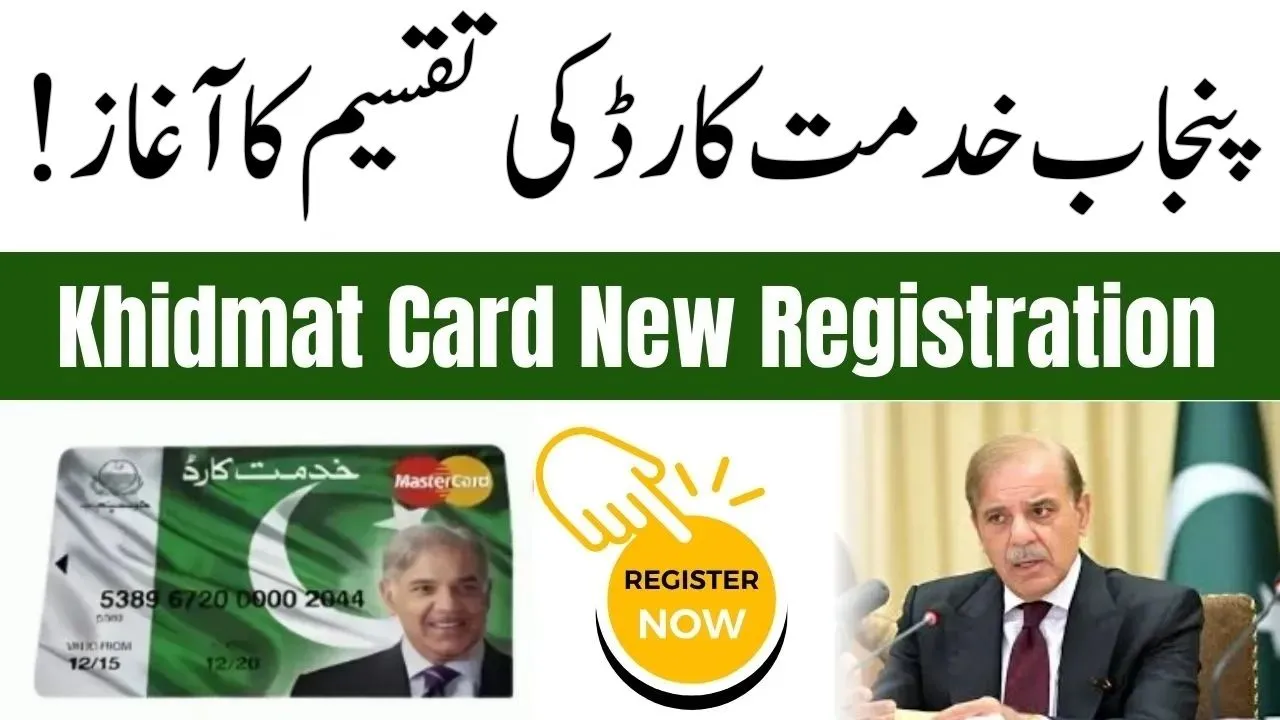
The Chief Minister Khidmat Card program stands as Punjab’s flagship initiative for supporting persons with disabilities and economically disadvantaged families. As we enter 2026, the program has undergone significant digital transformation, making accessibility easier while maintaining robust security measures to ensure benefits reach deserving recipients.
This comprehensive guide walks you through every aspect of the Khidmat Card system, from understanding eligibility requirements to navigating the application process and maximizing available benefits.
What Makes the CM Khidmat Card Different?
Unlike traditional welfare programs that rely on manual distribution and paper-based systems, the Khidmat Card leverages modern banking infrastructure to deliver direct financial support. This approach eliminates multiple layers of bureaucracy that historically delayed or reduced assistance reaching beneficiaries.
The card functions as both a payment mechanism and an identity document, streamlining access to various government services. Cardholders can withdraw funds at any Bank of Punjab ATM, reducing dependency on specific locations or office hours. This flexibility proves especially valuable for individuals with mobility challenges or those living in remote areas.
Core Program Objectives
The government designed this initiative with several interconnected goals. First and foremost, providing dignified financial assistance that respects beneficiary privacy and autonomy. Rather than requiring public queues or identity disclosure, cardholders access funds privately through standard banking channels.
Second, the program aims to reduce exploitation by intermediaries. Direct digital transfers prevent unauthorized deductions or demands for unofficial payments. Every rupee allocated reaches the intended recipient without leakage.
Third, promoting financial inclusion among vulnerable populations. Many program beneficiaries gain their first experience with formal banking systems through the Khidmat Card, building financial literacy and access to broader economic opportunities.
Understanding the 2026 Payment Structure
Financial assistance through the Khidmat Card follows a quarterly disbursement schedule, with each beneficiary receiving Rs. 10,500 every three months. This amounts to Rs. 42,000 annually, providing consistent support throughout the year.
Quarterly Payment Calendar
January-March Quarter: Funds typically release in the first week of January, allowing beneficiaries to plan for winter heating costs and children’s educational expenses.
April-June Quarter: Second quarter payments arrive in early April, coinciding with pre-summer preparations and agricultural season requirements.
July-September Quarter: Third disbursement occurs in early July, helping families manage Eid expenses and back-to-school costs.
October-December Quarter: Final quarter payments release in early October, supporting winter preparation and year-end household needs.
Exact dates vary slightly by district based on administrative processing, but beneficiaries receive SMS notifications 3-5 days before funds become available.
Additional Financial Benefits
Beyond quarterly stipends, cardholders may qualify for supplementary assistance programs:
Emergency Relief Fund: One-time grants up to Rs. 25,000 during documented emergencies such as medical crises, natural disasters, or family emergencies affecting basic survival.
Education Support: Children of cardholders enrolled in government schools receive priority consideration for Himmat Card scholarships ranging from Rs. 3,000 to Rs. 12,000 annually depending on education level.
Skill Development Stipends: Beneficiaries participating in approved vocational training programs through Social Welfare Department partnerships receive monthly stipends of Rs. 5,000 during training duration.
Marriage Support: Female cardholders receive one-time marriage assistance of Rs. 100,000 upon application, helping families meet cultural obligations without incurring debilitating debt.
Comprehensive Eligibility Requirements
The program implements strict yet fair eligibility criteria to ensure resources reach those most in need. Understanding these requirements helps potential applicants determine their qualification status before investing time in the application process.
Primary Eligibility Factors
Geographic Requirement: Applicants must demonstrate permanent residency in Punjab province through valid domicile certificate or CNIC showing Punjab address. Temporary residents or those with domiciles from other provinces do not qualify regardless of current residence.
Disability Documentation: The centerpiece requirement involves official disability certification. Acceptable documentation includes:
- Disability certificate issued by District Social Welfare Officer following medical board assessment
- NADRA CNIC displaying official disability logo indicating recognized disability status
- Medical Board Certificate from designated government hospital confirming permanent disability
- Special Education Department certification for developmental or cognitive disabilities
The program recognizes physical disabilities (mobility impairments, amputations, paralysis), sensory disabilities (blindness, deafness, speech impairments), intellectual disabilities, and chronic medical conditions severely limiting daily functioning.
Economic Status Verification: Applicants undergo Proxy Means Test (PMT) scoring through the Punjab Socio-Economic Registry. This comprehensive assessment evaluates:
- Housing construction materials and condition
- Household asset ownership including vehicles, appliances, and electronics
- Land ownership and agricultural resources
- Employment status and income sources for all household members
- Access to utilities like electricity, gas, and clean water
- Educational attainment levels within the family
Scoring below 45 on the PMT scale indicates economic vulnerability qualifying for assistance. The threshold ensures support targets genuinely disadvantaged households rather than those with adequate resources.
Employment Restrictions: Government employees with permanent positions, retired pensioners, and individuals employed in formal sector positions paying above minimum wage typically don’t qualify. The program focuses on unemployed persons with disabilities, informal sector workers, and those unable to maintain regular employment due to disability-related limitations.
No Duplicate Benefits: Applicants already receiving major assistance through programs like Bait-ul-Maal disability support, BISP at enhanced rates, or similar provincial schemes face restrictions. However, receiving standard BISP payments through 8171 or minor utility subsidies doesn’t automatically disqualify candidates.
Special Consideration Categories
Certain applicants receive priority processing and may qualify under slightly relaxed criteria:
Women with Disabilities: The program reserves minimum 30% allocation for women, recognizing additional barriers they face. Women applicants with disabilities receive priority even if their household PMT score falls slightly above standard thresholds.
Children with Disabilities: Families with disabled children under 18 years receive special consideration, with parents or guardians becoming cardholders on behalf of minors. This ensures families caring for disabled children receive financial support for associated expenses.
Severe Disability Cases: Individuals with complete paralysis, total blindness in both eyes, severe intellectual disabilities, or conditions requiring full-time care qualify regardless of minor PMT score variations, acknowledging extraordinary support needs.
Transgender Community: Recognizing unique vulnerabilities, transgender individuals with disabilities receive fast-track application processing and dedicated support channels through Social Welfare offices.
Step-by-Step Application Process
Applying for the CM Khidmat Card involves multiple stages designed to verify eligibility while maintaining accessibility. The process has been streamlined for 2026, offering both digital and in-person options.
Phase 1: PSER Registration
The Punjab Socio-Economic Registry forms the foundation of eligibility determination. If your household hasn’t completed PSER registration previously, this becomes your first step.
Initial Registration Steps:
Visit the official PSER website or nearest e-Khidmat Markaz. Create an account using your 13-digit CNIC number and active mobile number registered under your name. The system sends an OTP (one-time password) for verification.
Complete the detailed household survey covering all family members, income sources, assets, and living conditions. Be thorough and accurate—inconsistencies discovered during verification delay processing or result in rejection.
Upload clear, legible copies of required documents including CNIC front and back, recent utility bill, property ownership documents if applicable, and photographs of your residence showing exterior and interior conditions.
Submit the survey and note your PSER registration number. This unique identifier tracks your application throughout the system.
Survey Verification Timeline:
After submission, field teams conduct physical verification within 30-45 days. Inspectors visit your residence unannounced to confirm information accuracy. Ensure someone is available at the registered address during business hours.
Following verification, PMT scores are calculated and uploaded to your PSER profile. You receive SMS notification when your score becomes available. Check your score through the PSER portal using your CNIC.
Phase 2: Khidmat Card Application
Once PSER registration completes with a qualifying PMT score, proceed to Khidmat Card application.
Online Application Method:
Access the Social Welfare Department website or download the official Punjab Social Welfare mobile application available on Google Play Store. Login using your CNIC and the mobile number registered during PSER enrollment.
Navigate to the Khidmat Card section and click “Apply Now.” The system automatically pulls your PSER data, pre-filling basic information. Review for accuracy and make corrections if needed.
Upload disability-specific documents:
- High-resolution scan of disability certificate showing official stamps and signatures
- Medical reports supporting disability claims from the last 12 months
- Recent passport-size photographs with white background
- Disability verification letter from registered medical practitioner if available
Select your preferred Bank of Punjab branch for card collection. Choose a branch near your residence for convenience.
Review all information carefully before final submission. Once submitted, applications cannot be edited—only withdrawn and resubmitted, causing processing delays.
In-Person Application Method:
For those uncomfortable with digital processes or lacking internet access, visit your District Social Welfare Office during working hours (8:00 AM to 4:00 PM, Monday through Thursday; 8:00 AM to 12:00 PM Friday).
Bring original documents:
- Valid CNIC
- Disability certificate
- Two recent passport-size photographs
- Proof of residence (utility bill or domicile)
- PSER registration number if already enrolled
Office staff will guide you through the application, entering information into the digital system on your behalf. The process typically takes 30-45 minutes per applicant.
Request a written acknowledgment receipt containing your application reference number. This proves application submission and enables status tracking.
Phase 3: Medical Board Assessment
Applications involving new disability certificates or requiring verification undergo medical board review. The Social Welfare Department notifies applicants via SMS about assessment schedules.
Assessment Procedure:
Report to the designated government hospital on your appointed date bringing all medical records, previous treatment documentation, and X-rays or diagnostic reports if available.
A panel of three medical specialists examines applicants to verify disability claims and assess severity. This evaluation ensures program integrity and appropriate categorization.
The medical board completes assessment within 30 minutes per case. Results are forwarded directly to Social Welfare Department electronically, eliminating opportunities for document tampering.
Applicants with permanent disabilities established through clear medical evidence typically complete this stage quickly. Cases involving disputed claims or ambiguous conditions may require additional documentation or follow-up assessments.
Phase 4: Final Approval and Card Issuance
After successful completion of all verification stages, applications enter final approval queue.
Approval Timeline:
Standard processing from complete application to approval takes 60-90 days. Priority cases (women, severe disabilities, children) may process faster, often within 45-60 days.
The Social Welfare Department reviews applications in submission order within each priority category. Approval decisions consider disability documentation authenticity, PMT score, and verification report findings.
Approved applicants receive SMS notification containing card collection details and Bank of Punjab branch information.
Card Collection Process:
Visit the designated Bank of Punjab branch within 30 days of approval notification. After 30 days, cards transfer to District Social Welfare Office for collection.
Bring your original CNIC and application reference number. Bank staff verify identity through biometric thumb impression matching NADRA database.
Complete card activation by setting your 4-digit ATM PIN at the bank. Choose a memorable but secure PIN—avoid obvious combinations like 1234 or your birth year.
Test the card immediately by checking balance at the bank’s ATM before leaving. Your first quarterly payment should already be loaded if application approval coincided with a disbursement cycle.
Maximizing Your Khidmat Card Benefits
Simply receiving the card is just the beginning. Understanding how to leverage associated benefits amplifies program value significantly.
Healthcare Access Programs
Cardholders qualify for subsidized healthcare services through government facilities. Present your Khidmat Card at any DHQ (District Headquarters Hospital) or THQ (Tehsil Headquarters Hospital) for:
Free Outpatient Services: Consultations with specialist doctors, diagnostic tests, and prescribed medications from hospital pharmacies at no cost.
Subsidized Surgeries: Major procedures including orthopedic surgeries, cataract removals, and other disability-related operations at 75% reduced rates.
Assistive Devices: The Social Welfare Department maintains partnerships with manufacturers providing wheelchairs, crutches, hearing aids, prosthetic limbs, and white canes. Cardholders receive these devices free or at minimal cost after needs assessment.
Physiotherapy Sessions: Many district hospitals offer subsidized physical therapy programs for cardholders working toward functional improvement.
Transportation Concessions
Punjab Mass Transit Authority extends travel concessions to Khidmat Card holders on public transportation systems:
Metro Bus Services: 50% discount on all metro bus routes in Lahore, Rawalpindi, and Multan. Show your card when purchasing tokens.
Local Bus Travel: Many cities offer reduced fares on designated routes. Inquire at bus stations about cardholder discounts.
Railway Concessions: Pakistan Railways provides disability quota seats with reduced fares on intercity routes. Book through designated counters showing Khidmat Card.
Educational Opportunities
Children of cardholders and cardholders themselves can access enhanced educational support:
School Fee Waivers: Government schools and colleges waive admission and tuition fees for children from cardholder families. Submit card photocopy during admission.
Priority Admissions: Reserved seats in technical and vocational training institutes ensure access to skill development programs.
Scholarship Priority: Various Punjab government scholarship programs give preference to cardholder families meeting academic criteria.
Vocational Training Access
The Social Welfare Department operates skill development centers across Punjab offering free training in:
- Computer operation and basic programming
- Mobile phone repair and electronics
- Tailoring, embroidery, and textile crafts
- Food preparation and catering services
- Beauty parlor operations
- Small business management
Cardholders receive training stipends covering transportation and meal costs during program duration. Successful graduates gain assistance with business setup through microfinance partnerships.
Troubleshooting Common Issues
Even well-designed programs encounter occasional challenges. Understanding solutions to frequent problems saves time and frustration.
Application Rejection Reasons
PMT Score Above Threshold: If your socio-economic score exceeds 45, focus on ensuring PSER survey accurately reflects your household situation. Request re-survey if circumstances changed since initial assessment or if you believe errors occurred during data collection.
Incomplete Documentation: Missing or unclear disability certificates cause most rejections. Ensure certificates contain:
- Official government letterhead
- Medical officer’s signature and stamp
- NADRA verification code
- Issue and expiry dates
- Specific disability description
Duplicate Registration: Applying through multiple channels or family members simultaneously triggering duplicate flags. Withdraw redundant applications immediately and proceed with single application only.
Employment Disqualification: If system shows employment status conflicting with eligibility, obtain unemployment certificate from relevant authority or submit proof of income below threshold limits.
Payment Delays
Card Activation Issues: If funds don’t appear after expected disbursement date, verify card activation status at Bank of Punjab branch. Inactive cards don’t receive credit.
Incorrect Account Linking: Technical errors sometimes prevent payment routing. Visit District Social Welfare Office with card and CNIC to verify account mapping in the system.
Suspended Status: Periodic eligibility reviews may temporarily suspend payments pending verification. Check status through 8171 web portal or contact helpline 1312 for specific suspension reasons.
Lost or Damaged Cards
Report lost cards immediately to Bank of Punjab helpline 042-111-267-627. Request card blocking to prevent unauthorized use.
Visit your card-issuing branch with original CNIC and police FIR (in case of theft) or damaged card (if malfunctioning). Replacement cards issue within 7-10 working days.
Temporary ATM withdrawal authorization can be arranged at the branch using biometric verification while awaiting replacement, ensuring uninterrupted fund access.
PIN Forgotten or Blocked
After three incorrect PIN entries, cards automatically block for security. Visit any Bank of Punjab branch with your CNIC for PIN reset.
The process requires biometric verification and identity confirmation. New PIN options immediately, with no waiting period or fees.
Integration with Other Government Programs
The Khidmat Card doesn’t exist in isolation. Understanding how it connects with other initiatives maximizes available support.
BISP Coordination
Many Khidmat Card recipients also qualify for Benazir Income Support Programme assistance. The programs complement rather than conflict:
Separate Payment Streams: BISP payments continue through standard 8171 web portal channels while Khidmat Card provides additional disability-specific support.
Combined Benefits: Eligible families receive both programs’ benefits without reduction, recognizing that disability creates extraordinary expenses beyond general poverty support needs.
Unified Database: Both programs share verification data, streamlining enrollment and preventing duplicate surveys.
Sehat Card Linkage
Punjab’s health insurance initiative connects with Khidmat Card records:
Automatic Enrollment: Khidmat Card holders receive priority Sehat Card enrollment with family coverage up to Rs. 1,000,000 annually for hospitalization.
Enhanced Coverage: Disability-related procedures and ongoing treatments receive special consideration under combined program benefits.
Simplified Claims: Using both cards together at empaneled hospitals accelerates claim processing and reduces documentation requirements.
Housing Programs
Cardholders gain priority consideration in government housing initiatives:
Apni Chhat Apna Ghar: Interest-free housing loans with extended repayment periods and reduced down payment requirements.
Awami Residential Scheme: Reserved plots in government housing developments at subsidized rates.
Housing Repair Grants: One-time assistance up to Rs. 150,000 for essential home modifications improving disability accessibility.
District-Wise Implementation Status
Program implementation varies across Punjab districts based on infrastructure and population density. Understanding your district’s specific procedures helps set realistic expectations.
Urban Centers (Lahore, Rawalpindi, Faisalabad, Multan)
These districts maintain multiple facilitation centers with full digital infrastructure. Online applications process smoothly with faster verification timelines (45-60 days average).
Multiple Bank of Punjab branches in urban areas provide convenient card collection and ATM access. Medical boards meet weekly, reducing assessment waiting times.
Suburban Districts (Gujranwala, Sialkot, Sargodha, Bahawalpur)
Moderate infrastructure supports both online and offline applications. Processing times average 60-75 days.
Bank of Punjab maintains branches in tehsil headquarters. Monthly medical board sessions require advance scheduling.
Rural Districts (Rajanpur, Dera Ghazi Khan, Mianwali, Bhakkar)
Limited internet connectivity makes in-person applications more common. Mobile registration units visit remote areas quarterly.
Processing extends to 75-90 days due to geographical challenges in verification. Nearest Bank of Punjab branches may require travel to district headquarters.
The Social Welfare Department provides transportation assistance for card collection in remote areas through partnership with local transport operators.
Future Program Enhancements
The government continues developing the Khidmat Card initiative with several planned improvements:
Digital Wallet Integration
By late 2026, cardholders will be able to link their cards with mobile wallet services like JazzCash and Easypaisa, enabling:
- Instant fund transfers to family members
- Bill payments directly from card balance
- Mobile top-up purchases
- Small merchant payments without ATM withdrawal
Expanded Merchant Acceptance
Negotiations with retailers aim to enable direct card usage for purchases at grocery stores, pharmacies, and utility offices, eliminating cash handling requirements.
Automated Eligibility Reviews
Artificial intelligence systems will continuously monitor beneficiary status changes, automatically adjusting eligibility and preventing payment interruptions during life transitions.
Enhanced Healthcare Network
Expanding partnerships with private medical facilities will provide cardholders access to quality specialized care when government facilities lack capacity.
Financial Planning for Beneficiaries
Receiving regular assistance creates opportunities for financial stability and growth. Consider these strategies:
Emergency Savings
Dedicate 10-15% of each quarterly payment to emergency reserves. Even Rs. 1,500 per quarter accumulates to Rs. 6,000 annually, providing buffer against unexpected expenses.
Debt Reduction
If you carry high-interest debt, prioritize repayment. The consistent quarterly income enables structured payoff plans, reducing long-term financial stress.
Income Generation Investments
Consider using portions of payments for small business investments aligned with your capabilities:
- Purchase sewing machine for home-based tailoring
- Stock mobile airtime for small retail operation
- Buy materials for handicraft production
- Invest in livestock for gradual herd building
Children’s Education
Prioritize educational expenses from Khidmat Card payments. Education remains the most reliable path to breaking intergenerational poverty cycles.
Understanding Your Rights as a Cardholder
The program establishes clear beneficiary rights ensuring dignified, respectful treatment:
Privacy Protection: Your disability status and financial information remain confidential. Unauthorized disclosure by officials violates data protection laws.
Grievance Redressal: You can file complaints about mistreatment, payment issues, or application problems through:
- Social Welfare Department complaint portal
- Chief Minister’s Complaint Cell
- Punjab Ombudsman Office
- Direct applications to District Social Welfare Officer
Appeal Rights: Application rejections can be appealed within 30 days with supporting documentation. Appeals receive review by senior officers not involved in initial decisions.
Timely Payments: Beneficiaries have the right to receive funds on announced schedules. Unexplained delays beyond 15 days warrant formal complaint.
Respectful Treatment: All interactions with program officials should maintain dignity and respect. Discriminatory behavior or exploitation attempts should be immediately reported.
Frequently Asked Questions
Can I hold Khidmat Card if I’m already receiving BISP payments?
Yes, both programs serve different purposes and can be accessed simultaneously. Khidmat Card specifically addresses disability-related needs while BISP provides general poverty support. Many beneficiaries receive both without issues.
What happens if my disability improves or changes?
Notify the District Social Welfare Office about significant health changes. Partial improvement rarely affects eligibility unless your condition no longer meets disability criteria. Periodic medical reviews assess continuing eligibility.
Can family members use my Khidmat Card?
The card should only be used by the registered holder. However, if disability prevents independent ATM use, authorized family members can withdraw funds with your consent. Register a trusted relative as your representative at the Social Welfare Office for such situations.
How long does approval remain valid?
Once approved, benefits continue indefinitely as long as eligibility conditions persist. Annual verification through simple SMS confirmation or brief in-person checks ensures continued qualification.
What if I move to a different district within Punjab?
Update your address through the PSER portal or at your nearest Social Welfare Office. Benefits continue uninterrupted, though card collection for replacements shifts to your new district’s Bank of Punjab branch.
Are there age restrictions for applicants?
No upper age limit exists. From children to elderly individuals, anyone meeting disability and economic criteria qualifies. Parents or guardians apply on behalf of minor children with disabilities.
Can I close my Khidmat Card account voluntarily?
Yes, submit written application to your District Social Welfare Officer explaining reasons for discontinuation. However, carefully consider this decision as reapplication later requires complete process repetition.
Program Impact and Success Stories
Since launch, the CM Khidmat Card has transformed thousands of lives across Punjab. The program’s success lies in its holistic approach combining direct financial support with access to services and opportunities.
The initiative particularly empowers women with disabilities who previously depended entirely on family members for survival. Independent access to funds enhances autonomy and decision-making power within households.
Parents of children with disabilities report reduced financial stress, enabling better care and educational investments. The predictable quarterly payments facilitate planning for medical treatments and therapeutic interventions.
Many beneficiaries have successfully launched small businesses using accumulated card funds, graduating from pure dependency to partial self-reliance. The program deliberately encourages such progression without penalizing initial success.
Staying Informed About Program Updates
Government policies and procedures evolve regularly. Stay current through:
Official Channels:
- Punjab Social Welfare Department website
- Official social media pages (Facebook, Twitter)
- SMS alerts (register your number at Social Welfare Office)
- Local newspapers and TV announcements
Community Resources:
- Union Council notice boards
- NGO disability rights organizations
- Local advocacy groups
Personal Monitoring: Check your application status monthly through SMS or online portal until approval. After receiving card, verify balance before each expected payment date to catch issues early.
Conclusion
The CM Khidmat Card represents Punjab government’s commitment to inclusive development and social justice. By providing dignified, direct financial support alongside healthcare access and skill development opportunities, the program addresses both immediate survival needs and long-term empowerment goals.
Eligible individuals should apply promptly to access these benefits. The streamlined 2026 processes make enrollment more accessible than ever, with both digital and in-person options accommodating diverse circumstances.
Remember that the Khidmat Card is your right as a citizen, not charity. Approach the process confidently, maintain accurate documentation, and utilize available support services to navigate any challenges.
For those already receiving benefits through programs like 8171 ehsaas program, the Khidmat Card provides complementary support specifically addressing disability-related needs. Together, these initiatives create a comprehensive safety net enabling vulnerable families to live with dignity and hope for better futures.
Disclaimer: This guide provides general information based on current policies. Individual circumstances vary, and applicants should verify specific details through official Social Welfare Department channels before making decisions. Program terms and conditions may change; always consult official sources for the most current information.